Mostrando entradas con la etiqueta logistionary. Mostrar todas las entradas

lunes, 30 de junio de 2025

Logistionary: Genchi Genbutsu


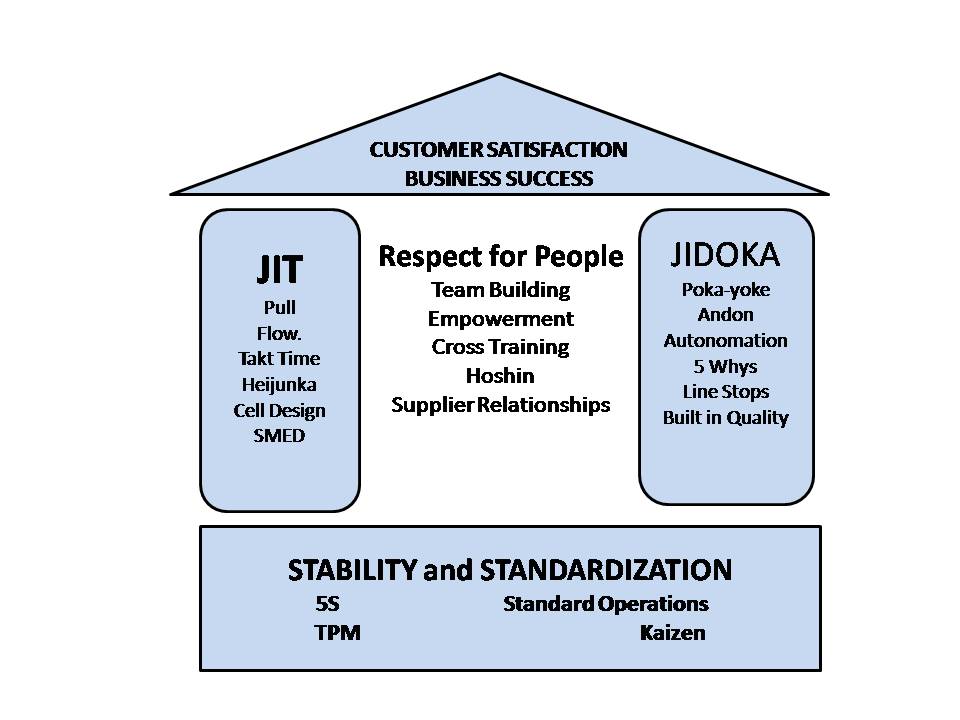
Genchi Genbutsu is a core principle of the Toyota Production System that translates to "go and see for yourself."

It emphasizes firsthand observation to understand situations deeply, solve problems accurately, and make informed decisions.

Instead of relying on second hand reports or data alone, leaders and team members are encouraged to go to the actual place where value is created, such as the factory floor, the customer site, or the development environment.

The Genchi Genbutsu approach involves:

  • Visiting the gemba: Physically going to the site of the issue or process.
  • Observing without assumptions: Understanding the facts directly through observation.
  • Engaging with people: Talking to employees, operators, or customers involved.
  • Asking “Why?” and using the “5 Whys” technique to get to the root cause.
 
Genchi Genbutsu promotes situational awareness, empathy, and fact-based leadership. It bridges the gap between strategy and execution, ensuring leaders stay grounded in operational realities.

Finally, a word to clarify the difference between Genchi Genbutsu and Gemba; Gemba means "the real place" where work happens and value is created (like a factory floor) Genchi Genbutsu means "go and see for yourself" and emphasizes firsthand observation to understand problems deeply.

Gemba is the location, Genchi Genbutsu is the mindset and method of investigation.


miércoles, 24 de julio de 2024

Logistionary: Kitting


Kitting is a technique where complementary items are ordered, packaged, or shipped together as a single "kit" with a unique SKU. 

Inventory kitting is a method of organizing inventory into kits.

From a production point of view, this would mean putting and storing together all the relevant ingredients for the manufacture of a given product.

This technique can also be used to pack together individual complimentary products to create one product that’s ready to ship to a single customer.

The goal of kitting is to assemble products ahead of time as a way to streamline the order fulfillment process. Companies can kit together products in anticipation of customer orders or as a marketing strategy to drive sales volume.

Before kitting, the traditional inventory model involved packaging separate SKUs on their own and sending them out as multiple different shipments, increasing both the cost and time involved for the company and the customer.

Product kitting has numerous benefits, including: 

  • Minimize pick-and-pack time by preparing ahead ingredients or final products.
  • Streamlining warehouse activities and lowering shipping costs
  • Optimizing inventory management by reducing slow moving stock (items that don't sell well as individual can be included in a kit that customers are more likely to buy)
  • Increasing customer satisfaction and convenience
  • Increase sales by pairing together items that may have not been bought separatedly.


viernes, 27 de octubre de 2023

Logistionary: Kanban


Kanban is a visual scheduling system for lean manufacturing.

It all started in the early 1940s when the first Kanban system was developed by Taiichi Ohno for Toyota automotive in Japan. It was created as a simple planning system, the aim of which was to control and manage work and inventory at every stage of production optimally.

The Kanban method gets its name from the use of kanban, visual signalling mechanisms to control work in progress for intangible work products.

Kanban aligns inventory levels with actual consumption. A signal tells a supplier to produce and deliver a new shipment when a material is consumed. This signal is tracked through the replenishment cycle, bringing visibility to the supplier, consumer, and buyer.

In contexts where supply time is lengthy and demand is difficult to forecast, often the best one can do is to respond quickly to observed demand. This situation is exactly what a kanban system accomplishes, in that it is used as a demand signal that immediately travels through the supply chain.

Kanban cards are a key component of kanban, and they signal the need to move materials within a production facility or to move materials from an outside supplier into the production facility. The kanban card is, in effect, a message that signals a depletion of product, parts, or inventory. When received, the kanban triggers replenishment of that product, part, or inventory.

Three-bin system

An example of a simple kanban system implementation is a "three-bin system" for the supplied parts, where there is no in-house manufacturing. One bin is on the factory floor (the initial demand point), one bin is in the factory store (the inventory control point), and one bin is at the supplier. The bins usually have a removable card containing the product details and other relevant information, the classic kanban card.

When the bin on the factory floor is empty (because the parts in it were used up in a manufacturing process), the empty bin and its kanban card are returned to the factory store (the inventory control point). The factory store replaces the empty bin on the factory floor with the full bin from the factory store, which also contains a kanban card. The factory store sends the empty bin with its kanban card to the supplier. The supplier's full product bin, with its kanban card, is delivered to the factory store; the supplier keeps the empty bin. This is the final step in the process. Thus, the process never runs out of product, and could be described as a closed loop, in that it provides the exact amount required, with only one spare bin so there is never oversupply.

If all this is confusing, and you´re still not clear on how Kanban works, Im sure the next image will make everything fall into place! One image is indeed worth a thousand words as they say!


jueves, 3 de agosto de 2023

Logistionary: Kano model


The Kano model is a theory for product development and customer satisfaction developed in the 1980s by Noriaki Kano, a professor of quality management at the Tokyo University of Science.

It´s an approach to prioritizing features on a product roadmap based on the degree to which they are likely to satisfy customers. Product teams can weigh a high-satisfaction feature against its costs to implement to determine whether or not adding it to the roadmap is a strategically sound decision.

The model involves two dimensions:

1. Achievement (the horizontal axis), which goes from the supplier didn’t do it at all to the supplier did it very well.

2. Satisfaction (the vertical axis), which goes from total dissatisfaction with the product or service to total satisfaction with the product or service.

It also identifies three levels of customer expectations: that is, what it takes to positively impact customer satisfaction

1. Expected needs: These are the must haves, the requirements that the customers expect and are taken for granted.

These expectations are also known as the dissatisfiers because by themselves they cannot fully satisfy a customer. However, failure to provide these basic expectations will cause dissatisfaction.

Examples: In a hotel, providing a clean room is a basic necessity. In a call center, greeting customers is a basic necessity.

2. Normal needs: These are known as the wants or the satisfiers because they are the ones that customers will specify from a list. They can either satisfy or dissatisfy the customer depending on their presence or absence.

Examples: Time taken to resolve a customer's issue in a call center. Waiting service at a hotel.

3. Exciting needs: These are features and properties that make a supplier a leader in the market. These are the delighters or exciters because they go well beyond anything the customer might imagine and ask for. Their absence does not dissatisfy the customer, but their presence improves the likelihood of purchase.

Examples: In a callcenter, providing special offers and compensations to customers or the proactive escalation and instant resolution of their issue is an attractive feature. In a hotel, providing free food is an attractive feature.

How Does the Kano Model Work?

Using the Kano Model, product teams pull together a list of potential new features vying for development resources and space on the roadmap. The team will then weigh these features according to the two competing criteria:

1. Their potential to satisfy customers.

2. The investment is needed to implement them.


martes, 23 de agosto de 2022

Logistionary: Demurrage and detention


Demurrage is a fine to the buyer which is enforced by a freight provider if they do not take their goods away from a port or terminal. Often ports and terminals allow importers to store goods or containers for a number of ‘free’ days, after which charges are applied.

As an example, let’s say a container is being shipped from a supplier in China to a port in Amsterdam. The port normally allows 7 free days of storage, after which they will start charging.

Detention on the other hand is a charge that can be enforced by a transport provider for not returning an empty container to a container yard or port after an agreed time.

As an example, if the buyer of goods takes a container to their factory for 14 days to unpack, and the shipping port allows just 10 days to return the box, then the shipping line will be charged ‘detention’ for 4 days.

The main difference between demurrage fees and detention fees is that demurrage fees are charged when a container is still full and under the control of the shipping line whereas detention charges, on the other hand, occur when the buyer holds on to a container outside the port beyond the specified free time given by the shipping line.

In very simple terms, demurrage charges relate to full containers while detention charges apply to empty containers.


miércoles, 3 de marzo de 2021

Logistionary: Vendor Managed inventory (VMI)


Vendor Managed Inventory (VMI) is an inventory management practice in which a supplier of goods, usually the manufacturer, is responsible for optimising the inventory held by a distributor/retailer.

In traditional inventory management, a retailer makes its own decisions regarding the order size and frequency, while in VMI the retailer share their inventory data with the supplier such that the supplier is the decision-maker who determines the order size and frequency.

In VMI practice, inventory location depends on the arrangement between the vendor and the customer. The first option is for the inventory to be located both at the customer's and the supplier's premises. For the supplier, this serves as a safeguard against short delivery cycles or synchronised production cycles.

Another option can be for the supplier to deliver to the retailer’s central warehouse or alternatively, to a third party's warehouse. Managing the inventory at the central warehouse enables better optimisation of deliveries and lower costs.

Finally, a third option would be for the inventory to be located directly at the retailer’s premises such as the shop floor itself.

From an inventory ownership point of view, in vendor managed inventory, there are several solutions in terms of payment and transfer of ownership.

In the first alternative, the supplier is the owner of inventory at the premises of retailer. Invoice is issued when the items are sold from the stock.

In the second alternative, retailer assumes ownership of the inventory receiving an invoice upon delivery. However, the supplier is not paid until the retailer sells the items from.

In the third alternative, retailer owns the inventory upon delivery, while the supplier invoices the retailer once the shipment has been made.

In the majority of the cases, the products will be in the possession of the retailer but will not be owned by them until the sale takes place, meaning that the retailer simply houses the product. This is referred to as consignment stock.

There a many advantage for both supplier and retailer of using VMI:


Retailers benefit from reduced risk of going out of stock since the supplier can have information about how the products are selling. 

Retailers also benefit from reduced carrying costs since they shouldn’t need to carry as much excess stock.

Supplier benefit from more control and more customer contact.

Suppliers get to gather information as to the demand for the products, this should also help reduce the amount of safety stock that suppliers need in their warehouse.

This practice can prevent the bullwhip effect since the supplier will have control over the end to end inventory.


domingo, 16 de diciembre de 2018

Logistionary: Kaizen


Kaizen is a Japanese word that means “change ofr better” but it´s also a philosophy that refere to continuously improve; instead of encouraging large, radical changes to achieve desired goals, Kaizen philosophy recommends that organizations introduce small improvements, preferably ones that could be implemented on the same day.

In Supply Chain Kaizen is an on going process and its purpose goes beyond simple productivity improvement. It is also a process that, when done correctly, humanizes the workplace and teaches people how to eliminate waste.

While Kaizen usually delivers small improvements, the culture of continual small improvements and standardization yields large results in terms of overall improvement in productivity.
The following video, although in Spanish compliments the abobe information in an easier and approachable way!


domingo, 12 de febrero de 2017

Logistionary; Drum-Buffer-Rope


Drum Buffer Rope (DBR) is a planning and scheduling solution derived from the Theory of Constraints (ToC).

The fundamental assumption of DBR is that within any plant there is one or a limited number of scarce resources which control the overall output of that plant. This is the “drum”, which sets the pace for all other resources. In order to maximize the output of the system, planning and execution behaviors are focused on exploiting the drum, protecting it against disruption through the use of “time buffers”, and synchronizing or subordinating all other resources and decisions to the activity of the drum through a mechanism that is akin to a “rope”.

Theory of Constraints uses a 5 step process, called a ‘Process Of On-Going Improvement’ (POOGI), to improve any system. These steps are called the 5 Focusing Steps:

- Step 1. Identify the system’s constraint(s), the drum

- Step 2. Exploit the System’s Constraint(s). 

- Step 3. Subordinate everything else to the above decisions. 

- Step 4. Elevate the constraint(s). Basically improve the performance of the drum

- Step 5. If in the previous steps a constraint has been removed, go back to step 1 and identify the new bottleneck


The Boy Scout example in The Goal (I already wrote a post long time ago about one of my favorite books!)

A very illustrative example was how the protagonist of the book manages a boy scout outing, especially how to keep the group together while different boys walked at different speeds. The solution was to put the slowest boy scout Herbie at the front, and prohibiting all others from overtaking him. Additionally, he lightens Herbie’s backpack so that he can walk faster.


miércoles, 9 de diciembre de 2015

Logistionary: Jidoka


Logistionary is back with new terms, definitions and concepts! And today it’s the turn for Jidoka.
For those of you that are familiarised with this term, there is still a lot to learn from this entry, for those that have never heard of Jidoka, watch out for what is one of the most important terms within the lean manufacturing environment.
First off, what is Jidoka, and why most of these terms have Japanese names?
Jidoka is the often forgotten pillar of the Toyota Production system but yet one of the most important, and the one that actually was a breakthrough in terms of achieving true excellence in manufacture.

Now, why most of these terms have Japanese names? Well, because they all actually were coined by the same person, Sakichi Toyoda, the founder of Toyota Industries, and the person that revolutionised the rudimentary logistic processes of that time. 


Coming back to the term that concerns us; Jidoka began with the invention of a simple device that could stop the shuttle on an automatic loom should the thread broke. This will prevent the machine from not only creating defects but also alerted the operator of a problem. This meant that now the operator could operate several machines at the same time and not only focus on just one in case something went wrong. This principle became known as “automation with a human touch”


Jidoka is based in 4 very simple principles:
  1. Discover an abnormality
  2. Stop
  3. Fix the immediate problem
  4. Investigate the root cause and correct


These principles are not just confined to use of machines, but they are visible in almost every aspect of lean manufacturing. It’s about building quality into a process rather than having to inspect the outcome at the end of the process.
Every individual in a lean company is allowed and actually is expected to stop the process should they discover an abnormality, this way problems are highlighted and actions to solve them are taken. This is a concept many western companies find hard to implement as they fear a loss in productivity derived from lines being constantly stopped. This fear however undermines the core principle of Jidoka which is investigating the root causes of problems and working on tackling them.
Even though stopping the lines might seem contra intuitive, in the long term the number of line stops begins to reduce as problems are removed and productivity begins to improve as root causes of problems are removed.
Within companies such as Toyota line stop is a way of life, if an operator detects a problem they pull a cord or push a button to stop the production line at the end of that production cycle. This alerts the team leader or supervisor who will immediately rush over to help solve the problem. If it can be easily corrected then they do so and restart the line, otherwise they call in whatever support is required to solve the problem.
The major obstacle to implement Jidoka and any other lean principles is the fear of the short term implications when stopping the lines, but once this concerns are overcame Jidoka has proven to be a major advantage in adding value and increasing productivity across all lines.
I hope you enjoyed this entry and you learnt something new. Watch this space for more interesting concepts in the near future!


domingo, 13 de septiembre de 2015

Logistionary: Heijunka


Heijunka means sequencing or smoothing of production. It has been definied as: “Leveling the type and quantity of production over a fixed period of time. This enables production to efficiently meet customer demands while avoiding batching and results in minimum inventories, capital costs, manpower, and production lead time through the whole value stream”.

The goal of this technique developed by Toyota as a mean to standardise work, is to produce intermediate goods at a constant rate so that further processing may also be carried out at a constant and predictable rate. This is achieved by switching from a line dedicated to a single product, which is therefore sensitive to sales variations, to a flexible line capable of manufacturing several types of product.

Some of the advantages of leveling production are:

  • Flexibility to make what the customer wants when they want it.
  • Reduced risk of unsold goods.
  • Balanced use of labor and machines.
  • Smoothed demand on the upstream processes and suppliers

The video below explains in detail production levelling, but if you still want a more thorough explanation check the second video out!


lunes, 27 de julio de 2015

Logistionary: Poka-yoke

Today we are starting a new section in this blog that I have wittily named “logistionary”. As I couldn’t find a decent way to link Supply Chain and Dictionary (supplychainary didn’t really sound great to me to be honest) I came up with logistics + dictionary which has by far a more harmonious sound!
To the point; every fortnight, as you could have imagined, I will try to present a term or a concept related to supply chain. You might know some of these terms but I’m certain you won’t know all of them. Terms like Kanban, Hoshin, Kaizen, Heijunka and many others will be defined and explained.
To open this new section, I’m please to introduce you to the concept of Poka-yoke.
Poka-yoke is a Japanese term that means "mistake-proofing" and it was adopted and introduced as part of the Toyota Production System.
Poka-yoke is any mechanism, either visual or physical, that helps an equipment operator avoiding mistakes. Its objective is to prevent, warn or correct possible human errors when operating the piece of equipment by eliminating product defects.
The focus is on:
-          Make harder to create the error
-          Make possible to reverse the error
-          Make obvious that the error has occurred
The aim of Poka-yoke is to design products and process so that mistakes can be detected and corrected immediately, eliminating defects at the source.
Zero defects is an important term firstly because it drives customer satisfaction and consequently customer loyalty what will result in more sales and secondly because by eliminating defects we are reducing costs.
In the two videos below you can find several examples of Poka-yoke. The second video will also show you the difference between soft and hard Poka-yoke, and will give you an idea of how Poka-yoke applies to appliances we use every day.
Keep an eye on the blog for our next term!