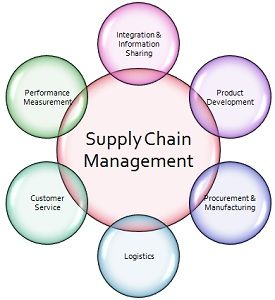
In this very brief entry we are going back to basics in order to understand what is the different between these two terms that some people mistakenly think are interchangeable.
We define Supply Chain management as the set of activities associated with sourcing, procurement, conversion and logistics management. It also encompasses the coordination and collaboration with parties like suppliers, intermediaries, distributors and customers. Logistics Management however is a small portion of Supply Chain Management that deals with the management of goods in an efficient way.
One of my favorite programs of all time is Extreme Engineering; I have been fascinated by the mega structures humanity has been building all over the world!
Thinking about it, this will be the first time we talk about this in the blog, and it´s surprising considering how relevant Supply Chain is in any of these humongous projects.
To unveil this new section, I thought that the best episode to share with you is the third episode of the second season "Container ships.
This episode examines the docking of a container and the operation of the water front, where thousands of containers need to be unloaded and loaded in 48 hours. Also covered in the episode is the building of the Adrian Maersk, the world´s largest container ship, and the challenges faced by the engineering team.
Waste minimization is the process of reducing the amount of waste produced
with the aim to eliminate the generation of harmful and persistent
wasters. Waste minimization involves efforts to minimize resources
and energy use during manufacture.
Waste
management on the other hand, focuses on processing waste after it´s
created, concentrating on reducing, reusing and recycling products
and components. Waste minimization should be seen as a primary focus
for most waste management strategies.
Zero
waste is a philosophy that encourages the redesign of resource life
cycles so that all products are reused and no waste is generated, it
encompasses more than eliminatig waste through recycling and reuse,
it focuses on restructuring the production and distribution systems
to reduce waste.
Many
companies have set ambitious targets waste reduction, and factories
have been targeted as the primarily function to trial waste reduction
principles.
One
prime example of this journey to zero waste is Uniliver; the giant FMCG started his journey back in 2009 with the aim to achieve zero
waste across their global factory network by 2020. They achieved
this target in 2014, 6 years ahead of plan. Here is how they did it:
The
challenge is now to roll out these best practices from factories to
distribution centres, head offices and customers. Hopefully one day,
the zero waste philosophy will be part of everybody´s life, in the
meantime, a few pioneers are showing us the way. Only a few changes
in our day to day life will mean a start to a journey to reduce our
impact in our planet.
Just-in-time manufacturing (JIT) also known as the Toyota Production
System is a methodology aimed at reducing flow times within
production systems as well as response times from suppliers and to
customers.
It originated in Japan in the 1960s and 1970s, but the wise use of
the term JIT faded in the 1990s as the new term “lean
manufacturing” was established as a more recent name for JIT.
Benefits:
- Lower warehouse costs. Since less
space is needed, this reduces the amount of storage an organisation
needs to buy or rent.
- Less amount of inventory
obsolescence, when companies use the traditional method of inventory
they can end up with pallets of unsold items that simply go to waste
- Defect rates are reduced resulting
in less waste and greater customer satisfaction.
Risks:
- You become reliant on your suppliers. Suppliers need to be able to
supply materials quickly with very limited advance notice and any
unexpected even can derive in long term out of stocks.
- Employees are at risk of precarious work as employers seek to
easily adjust their workforce in response to supply and demand
conditions by increasing the amount of contracting and temporary
work.
- By not carrying much of stock, the
risk of out of stocks is higher making imperative to have the correct
procedures in place to ensure stock can become readily available.
- More and better planning is
required to ensure stock is available at all times
If you want to learn more, check out the video below that explains in detail what JIT is and all the elements around this philosophy.
Couldn´t finish this post without some music. Happy week!
Surely not even in ten years time, this is what shopping will look like. Watch out because before you even realize some of these trends will be at the forefront of the way we shop!
I know this video has already been posted before when we talked about RFID technology, (you can find the post here) but i can´t help it! It´s IBM being almost 20 years ahead of the game!
In this second entrance, we will continue exploring one of the most spectacular initiatives in this century, the One belt, One road project.
In words of Swedish explorer Sven Hedin taking about the Silk Road: "It can be said without exaggeration that this artery through the whole of the old world is the longest and from a cultural-historical standpoint the most significant connecting link between peoples and continents that has ever existed on earth"
In the 21st century China want to emulate the old Silk Road, but instead of camels and wooden boats, trains and gigantic vessels will be responsible for half of the worlds trade.
For those of you that are not familiar with this initiative yet, the below video is a short, but very informative version of this project:
For those of you that want to know more, watch the next video, you will have to bear the lack of subtitles, but it´s worth it.
It will frame the context to better understand the importance of this project and how China´s development in the last 35 years has made it possible.
This is probably one of the most colosal initiatives in world´s history, one belt one road will change the world as we know it, and I will be showing you in the next posts how this humongous project is taking shape.
This post will probably be the first part of a series of post related
to the gigantic Chinese project “One road, one Belt”
In this first entry we will focus in the first string of the project
the new rail routes.
Until not too long ago the only two options available to transport
Chinese products to Europe were take an ocean bound route, which
although cheap can be very slow, or use an air carrier that is
considerably faster, but also much more expensive.
A third way was unlocked when the Chinese government launched a rail
freight service between China and Western Europe.
This line will connect Beijing and London, making it the first direct
rail link between the two cities.
The freight will span 7456 miles (12000 km) of railways crossing
Kazakhstan, Russia, Belarus, Poland, Germany, Belgium, France and the
UK.
The route is actually not new at all, it´s part o the old Silk Road,
which commenced more than 2000 years ago, through which Chinese silk
caravans carried wears to Europe and Africa. Now Beijing is aiming to
resurrect this historic trade route by using rail power.
This new plan is part of Chinese president Xi Jinping´s project to
improve the country´s trade links and revive the ancient Silk Road
route.
This new route also comes at a particularly well time for the UK,
with the government of Theresa May currently sourcing the world for
trade deals in anticipation of a departure from the EU.
The first cargo carrying 4 million worth of goods arrived in London
on the 8th of January after an eighteen day journey that was as much
an engineering challenge as a logistical problem with different types
of rail track in different countries meaning the same train can´t
travel the whole route and so the containers have to be removed and
reloaded onto different carriages at several stages of the journey.